Bringing suppliers and quality engineers onto one workflow.
I designed a web app that replaces spreadsheet-based 8D problem solving with one shared workflow, where quality engineers and suppliers find root causes, track fixes and prevent repeat defects, by hand or by chatting with Joule.
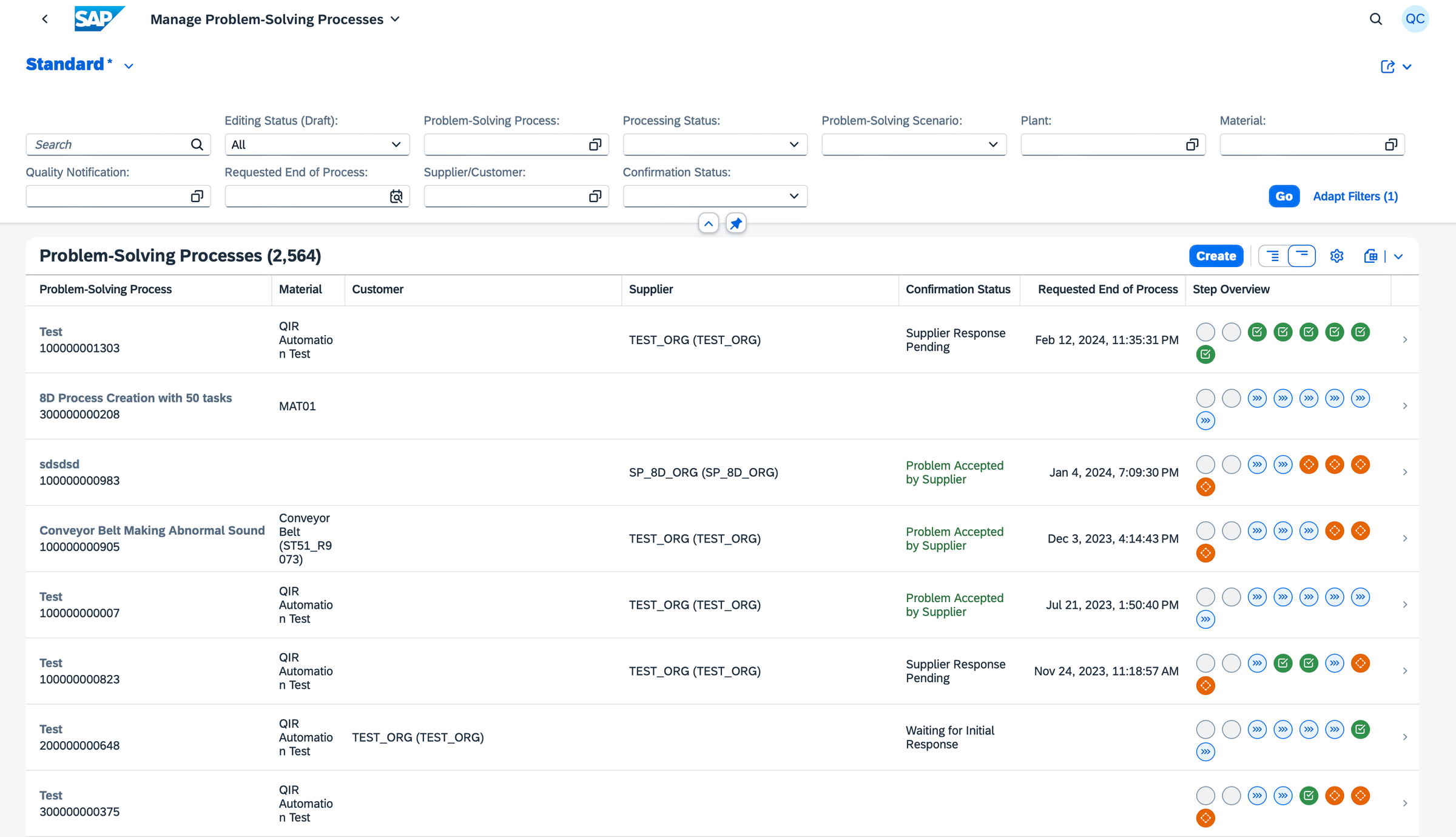
- 1Every 8D a quality engineer owns, in one filterable list.
- 2Where the supplier stands: accepted, pending or waiting.
- 3Step overview: the status of all eight disciplines at a glance.
The problem
When a defect hits a production line, quality engineers and suppliers use the 8D method to find the root cause and fix it.
In practice, this ran on emailed links, Excel sheets and printable forms. Status was invisible, follow-ups were endless, and many fixes never reached the true root cause, so defects came back.
What we learned
We interviewed quality engineers and suppliers about how they run 8D today. Four gaps kept coming up.
- Collaboration: there was no shared space, so everything moved by email.
- Tools: there was no built-in support for root cause methods like 5-Whys.
- Reporting: there was no easy way to summarise an 8D for stakeholders.
- Time: hours went into filling forms and chasing updates across sources.
One product had to serve two users with opposite roles: the customer who raises the issue and the supplier who solves it.
So the strategy was
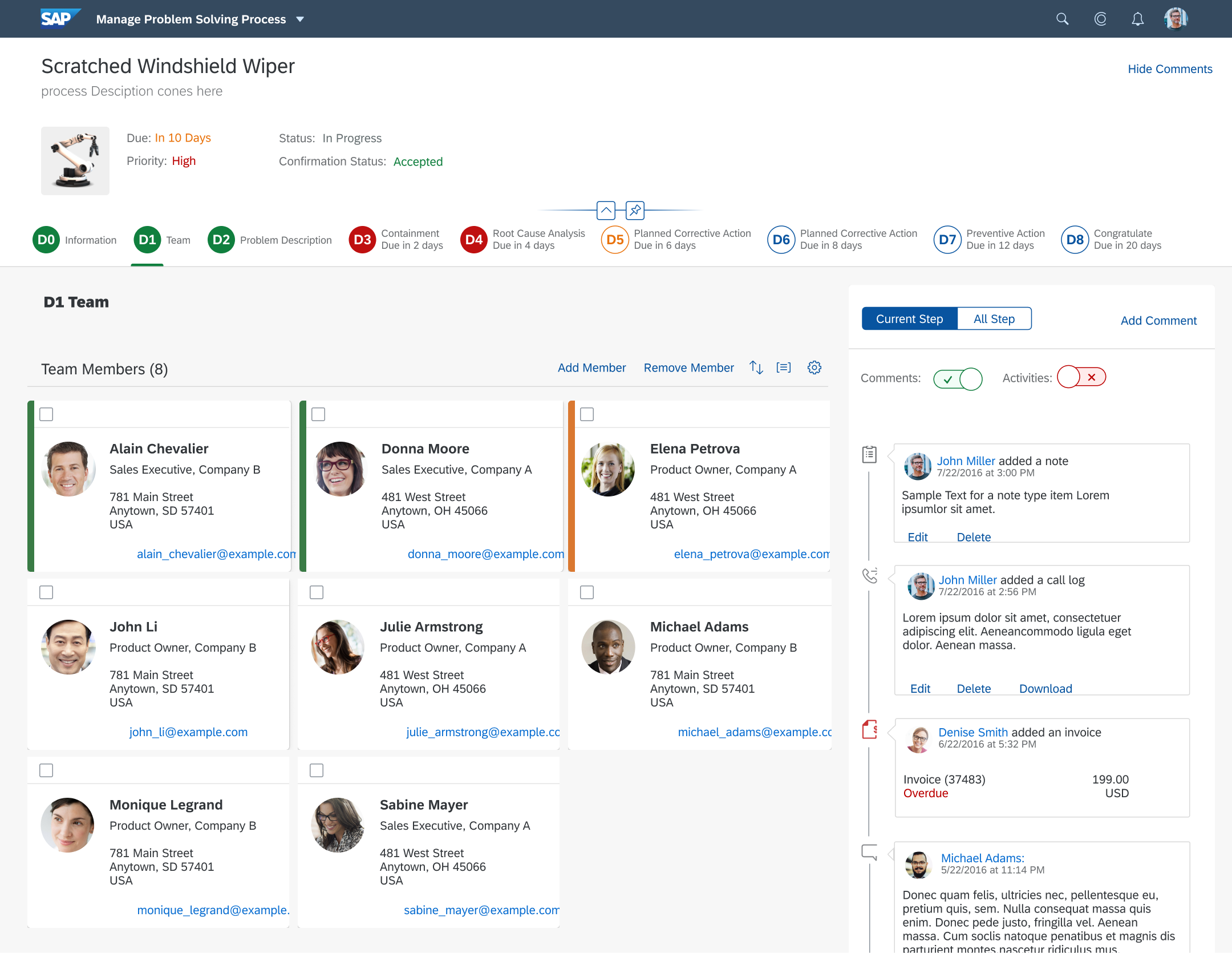
- One case, two seats. The customer and the supplier work on the same 8D, each from their own launchpad.
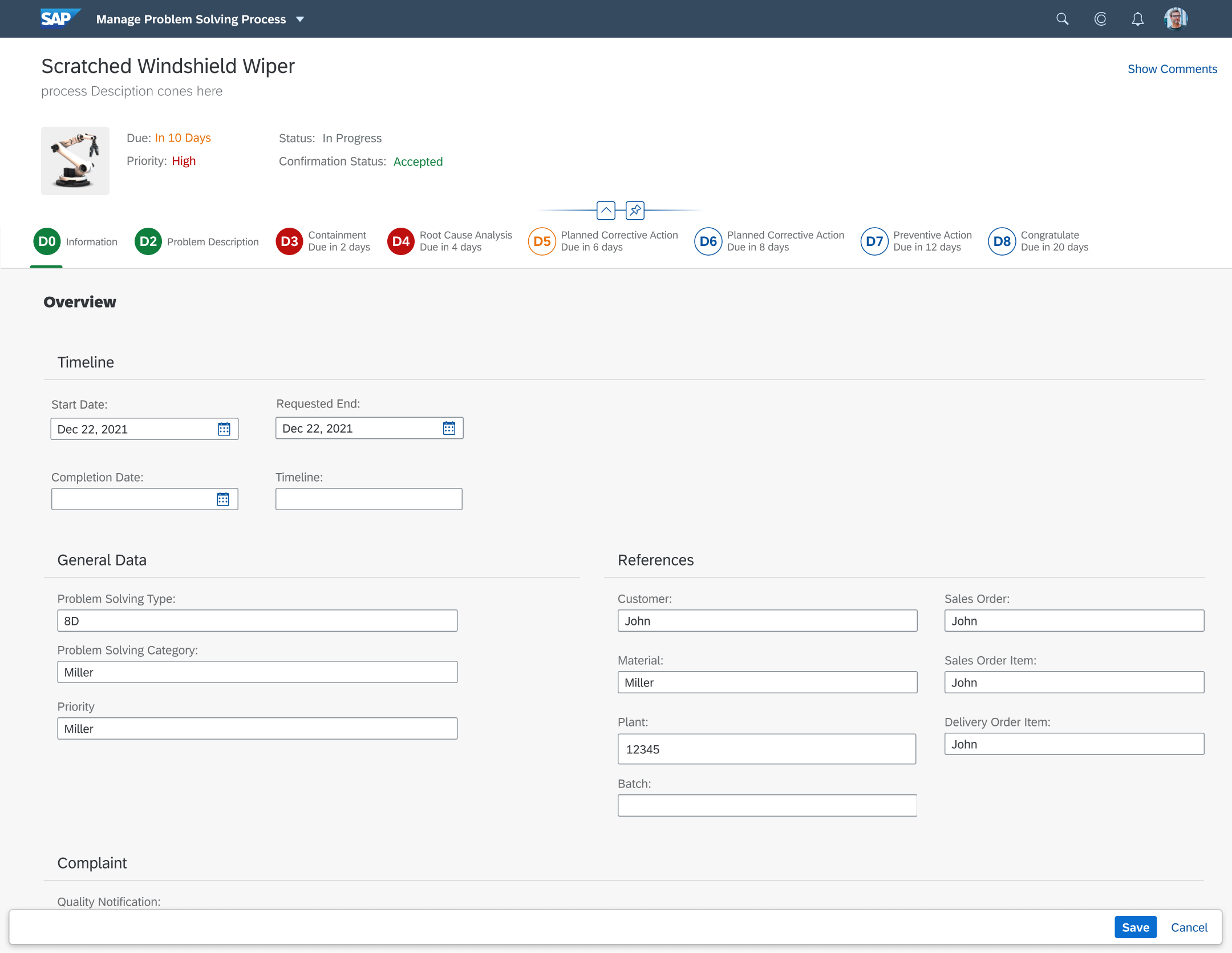
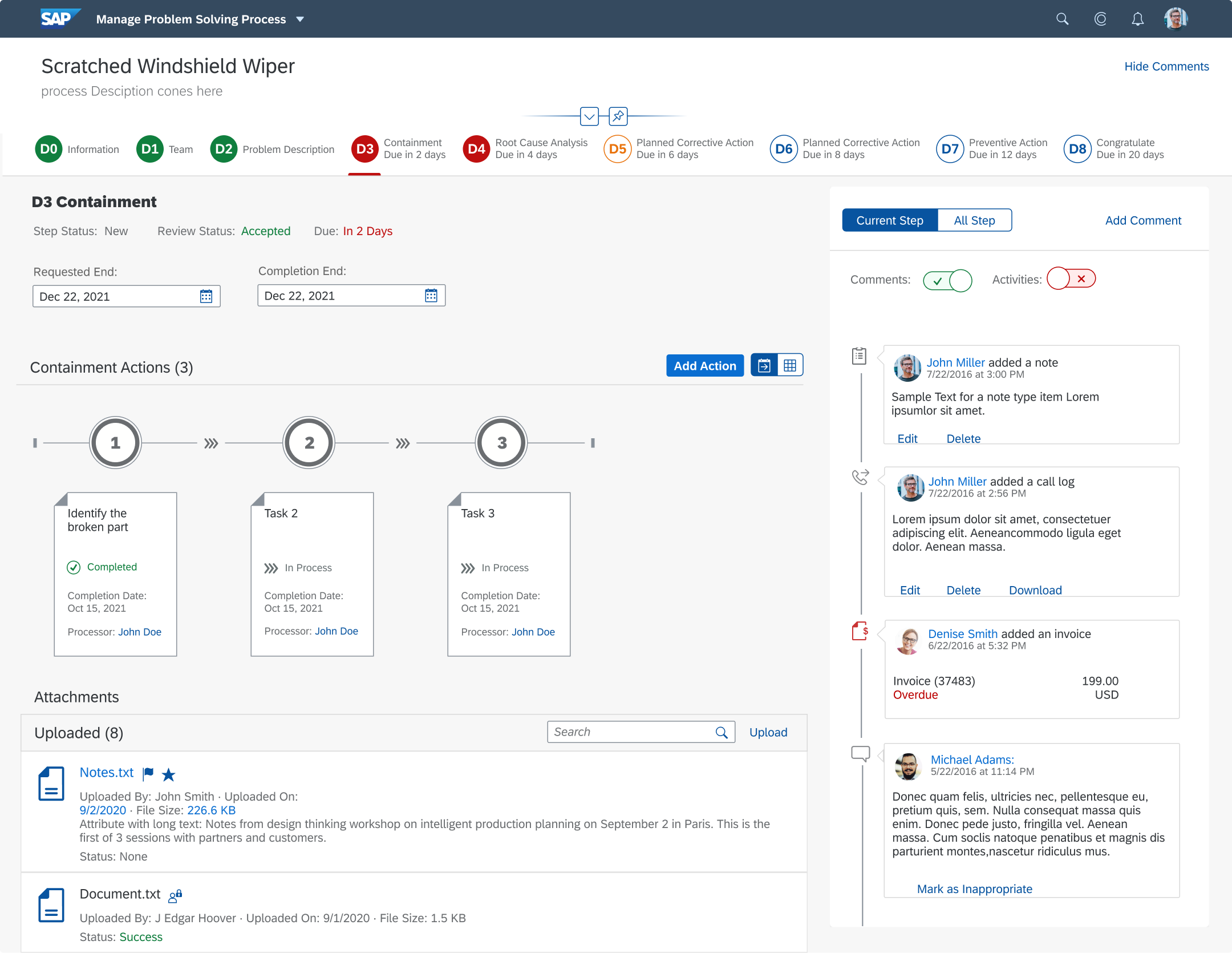
- A page per discipline. Each D-step is a clear unit with its own approval.
- Make status obvious. A list of all 8Ds shows where every issue stands.
Testing three layouts
We tested three Fiori floorplans with users. What they said decided the structure of the whole app.
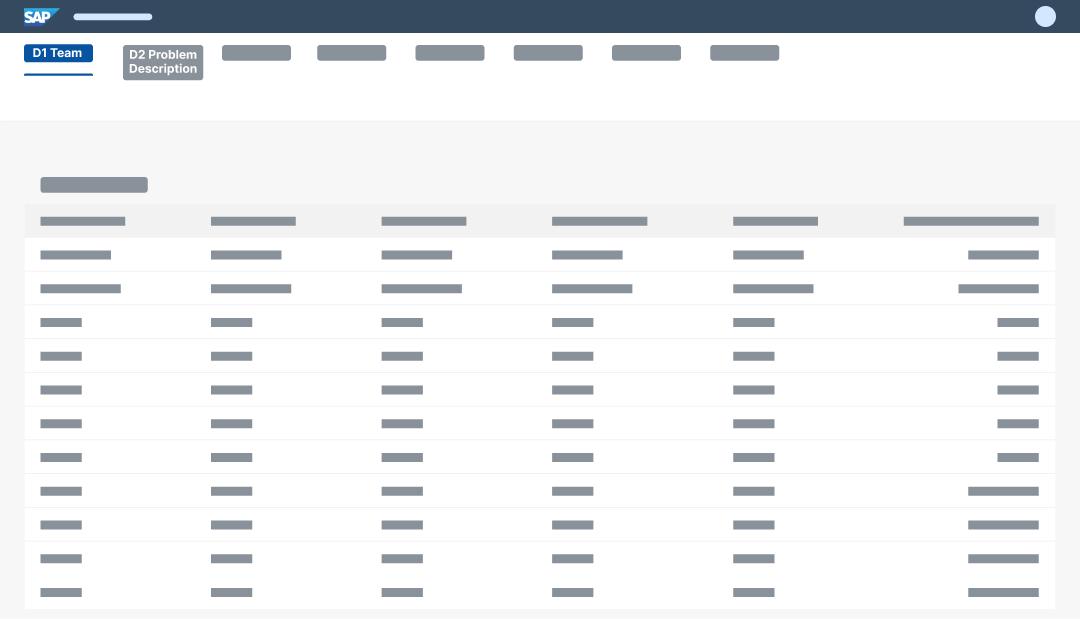
Tabs
"Will it approve only this step, or all of them?"
Users feared losing unsaved data when switching tabs.
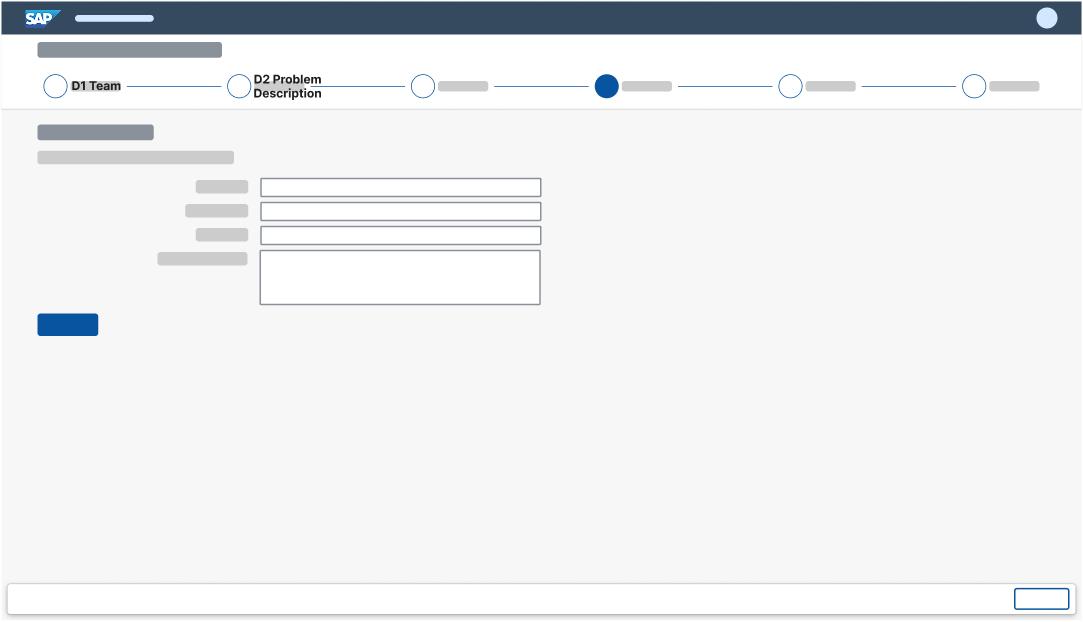
Wizard
"Can I go to step 5 directly?"
Users felt locked in and couldn't copy from earlier steps.
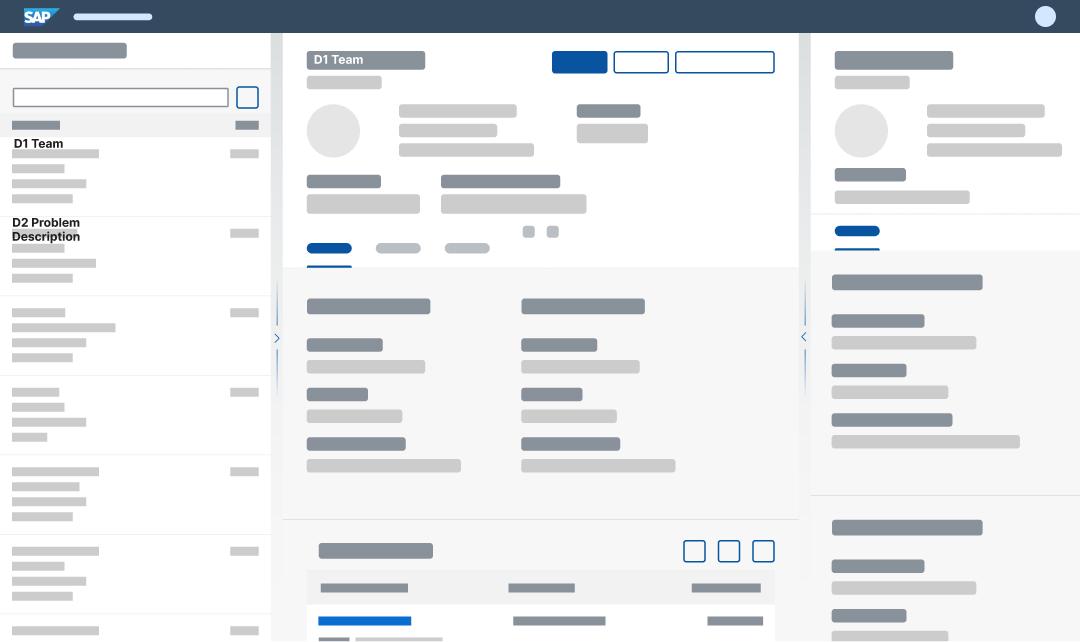
Sidebar + flexible columns ✓ chosen
"This is always visible, and always available."
Steps felt prominent, and moving between them felt safe.
The design 🏆
With the sidebar layout settled, each discipline became its own page. Every page shares one header with the issue's priority, due date and status, and one bar with all eight steps and their due dates.
Design decisions
Why one shared 8D instead of two apps?
The customer and the supplier were passing the same form back and forth by email. One record, opened from each side's own launchpad, gives both a single source of truth for status.
Why a sidebar, not a wizard or tabs?
In testing, the wizard made people feel locked in and tabs made approvals ambiguous. A sidebar keeps all eight steps visible and lets teams move between them freely, which is how 8D work actually happens.
Why approve each step, not the whole 8D?
Users tied finishing work to individual steps, not to the 8D as a whole. Per-step approval matched that mental model and let the customer review progress as it happened.
Why add Joule alongside the forms?
Quality work needs a structured, auditable record. Joule creates and fills the same 8D through conversation, so teams get speed without losing the structure, and the manual path stays for anyone who prefers it.
From form-filling to conversation (V2)
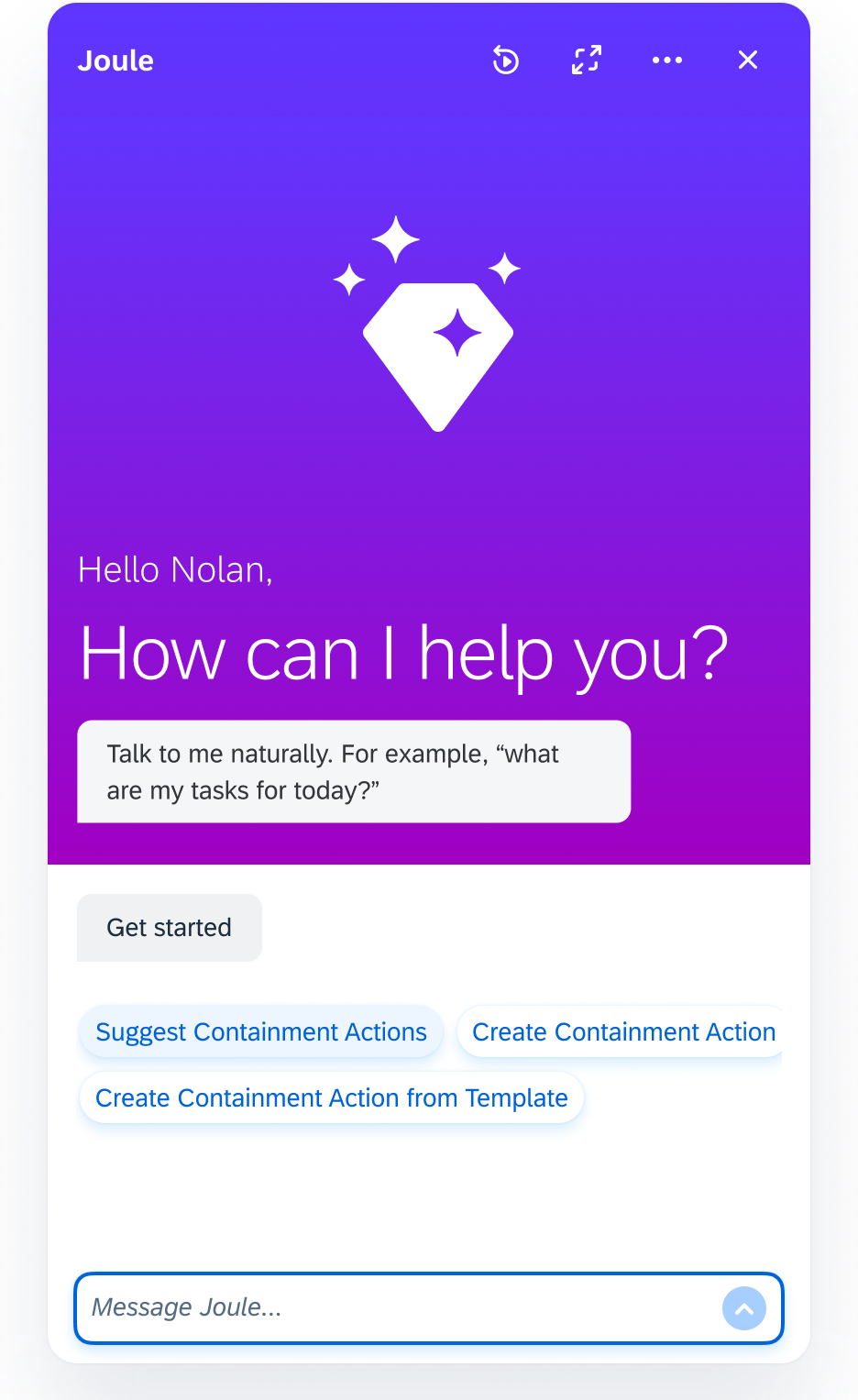
In V2, users can run the whole process through Joule, SAP's AI assistant, instead of filling in eight steps by hand.
- Start an 8D by asking. Joule files the problem-solving process from a description of the defect.
- Find the root cause. On an existing 8D, Joule analyses it and suggests the likely cause.
- Work end to end in chat, from problem description to preventive action.
The manual flow stays fully available. AI is a second path into the same 8D record.
Impact
What I'd measure next: time from defect to closed 8D, how often defects come back, and how much of the work happens through Joule versus by hand.